In the modern manufacturing landscape, sheet metal processing is a fundamental technique supporting industries ranging from aerospace and rail transportation to nuclear energy. As the global demand for high-precision, customized engineering components continues to grow, understanding the differences and key points of various processing services is crucial for maintaining a competitive edge. This guide will introduce core services—including laser cutting, stamping, forming, and welding—and explain how industry-leading companies like Sharp Century leverage advanced technology to meet stringent international standards.
Sheet metal processing is not a single process but a set of specialized services tailored to match the material characteristics and end-product functional requirements.
Different industries have different focuses for processing. For example, in the rail transportation sector, components like train interior panels and air conditioning enclosures must ensure structural strength while also considering appearance and texture. In the nuclear power industry, high-performance metal insulation and reactor protection/shells must withstand extreme environments. Precision requirements in these fields are uncompromising, as even a 1mm deviation could affect safety and efficiency.
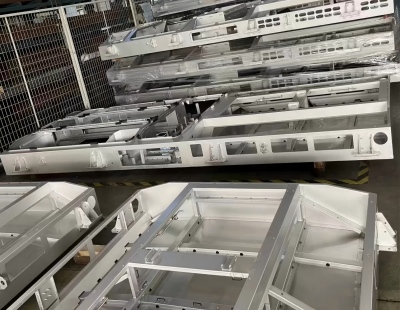
Sheet metal processing is also widely used in the food machinery sector, where stainless steel customization is crucial for hygiene and corrosion resistance. Similarly, in the textile machinery industry, components must be durable and require precise dynamic balancing to withstand high-speed operations. Sharp Century excels in addressing these diverse applications, offering customized solutions that include frame structures, cabinets, and complex mechanical parts.
The choice of metal forming method depends on design complexity, material thickness, and production volume.
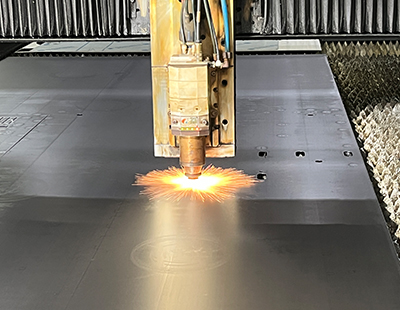
Laser cutting has become the "gold standard" for processing complex graphics. Using high-power fiber lasers (up to 20,000W at Sharp Century), this process offers extremely high precision with a smaller heat-affected area.
Stamping, on the other hand, uses CNC turret punches to quickly process holes and contours. Generally, laser cutting is more suitable for complex geometries and small to medium batches, while stamping often has a cost advantage for large volumes with relatively simple patterns.
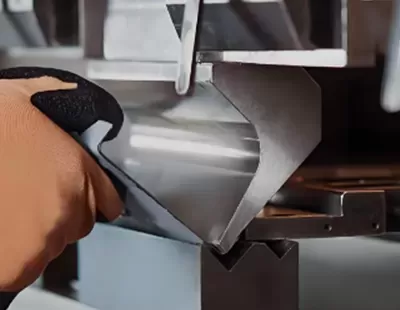
Forming involves obtaining specific angles and shapes through the plastic deformation of metal, usually completed with CNC bending machines. In industries such as environmental protection, forming is often used to manufacture specialized structural parts like exhaust treatment equipment and sewage purification tanks.
| Characteristics | Laser Cutting | CNC Stamping | CNC Bending/Forming |
|---|---|---|---|
| Most Suitable For | Complex shapes and prototyping | Repetitive patterns and hole processing | Forming three-dimensional structures/angles |
| Precision | Ultra-high (±0.1mm) | High | High (angle precision) |
| Material Waste | Minimal (optimized layout) | Moderate | Low |
| Speed | Fast for complex paths | Fastest for simple holes | Moderate |
| Typical Industries | Aerospace, Semiconductor | Textile, HVAC | Rail Transportation, Nuclear Power, Food |
Welding is a critical assembly step used to connect individual parts into a unified load-bearing structure.
The choice of welding method—TIG (Tungsten Inert Gas Welding), MIG (Metal Inert Gas Welding), or spot welding—depends on the material type and the required joint strength. To achieve more stable consistency and adapt to large-scale production, robotic welding is increasingly being adopted to ensure consistent weld formation and reduce human error.
In high-demand industries like rail transportation and nuclear energy, welding quality is constrained by strict international standards. Sharp Century holds top certifications, including EN 15085-CL1 (the highest level of welding for railway vehicles) and relevant standards of the AWS (American Welding Society). These certifications ensure that every weld meets rigorous safety and durability requirements.
The shift from traditional manual processing to CNC (Computer Numerical Control) processing has reshaped production efficiency and consistency.
CNC processing offers high repeatability and automation capabilities. Once the program is set, the equipment can produce thousands of identical parts with minimal deviation. This is especially critical for industries like semiconductor manufacturing and medical devices, where consistency is often a mandatory requirement for regulations and quality systems.
Although CNC is dominant, traditional manual techniques (such as manual cutting or basic welding) may still be used for simple repairs or unique one-off artistic creations—where the cost of CNC tooling/programming preparation for a single piece might be unjustified. However, in terms of industrial-grade product output, the precision of CNC equipment remains the industry standard.
Choosing a processing partner is a strategic decision that affects the product's lifecycle cost and delivery stability.
A supplier's equipment capability determines its processing limits. It is recommended to choose a factory equipped with high-power fiber lasers, multi-axis CNC bending/folding equipment, and multiple types of welding stations. For example, Sharp Century, by integrating advanced equipment, can handle materials like stainless steel, carbon steel, and aluminum with equal proficiency.
Besides hardware, it is essential to assess the supplier's industry experience: Are they familiar with your niche sector (such as environmental protection or rail transportation)? Do they offer "one-stop" services, including surface treatment and assembly? A full-service provider can reduce supply chain complexity and shorten delivery times, making the process from design to delivery smoother.
For companies needing high-precision metal components, understanding different types of sheet metal fabrication services is crucial. From the high-tech precision of laser cutting to the structural reliability brought by certified welding, every process is indispensable. By collaborating with established manufacturers like Sharp Century, companies can gain access to world-class technology and certification capabilities, ensuring that projects meet the highest global standards. For further information on how our sheet metal fabrication services can support your next project, feel free to contact us.