The global demand for customized metal fabrication solutions has surged in recent years, particularly in China, which stands as a key player in this industry. Understanding the cost of sheet metal fabrication in China is crucial for businesses looking to optimize their production costs without compromising quality. This article unveils the pricing landscape of the Chinese sheet metal fabrication market, explores influencing factors, highlights hidden costs, compares pricing with other countries, and offers insights into effective supplier selection for cost savings—especially for buyers evaluating china sheet metal fabrication partners.
The pricing structure for sheet metal fabrication in China is diverse and influenced by multiple elements. Typically, costs can range from $5 to $50 per part, depending on various factors such as material type, complexity, and production volumes. For instance, standard stainless steel components may cost approximately $15 per unit when ordered in bulk, whereas intricate designs requiring extensive machining could escalate to $40 each. The competitive landscape has intensified as many manufacturers attempt to reduce their prices while maintaining quality standards. Companies that invest in advanced technologies, like laser cutting and CNC machinery, often achieve better operational efficiencies, which subsequently lowers the overall cost per part. Additionally, partnerships with local suppliers can further optimize expenses through reduced shipping and handling fees. By examining case studies of leading firms, it is clear that those who engage in strategic sourcing and leverage local talent often enjoy significant cost advantages.
To make the price picture easier to understand, here is a simplified reference table (illustrative ranges; real quotes depend on drawings and specs):
| Cost Driver | Typical Impact on Unit Price | Example Notes |
|---|---|---|
| Material type (SS / Al / CS) | Medium–High | Stainless steel usually higher than carbon steel |
| Part complexity (holes, contours, tight tolerance) | High | More cutting time + more QC requirements |
| Quantity (prototype vs batch) | High | Larger batches reduce setup cost per part |
| Finishing (powder coat, anodize, passivation) | Medium | Adds process steps + vendor coordination |
| Lead time (standard vs expedited) | Medium–High | Rush orders often cost more |
Several key factors play a significant role in determining sheet metal prices in China. Firstly, the type of material selected directly influences costs; for example, high-grade stainless steel incurs higher prices compared to carbon steel. Secondly, complexity is paramount. More intricate designs necessitate advanced fabrication techniques, subsequently raising the manufacturing costs.
Labor costs are also pivotal. While China is known for its relatively low labor expenses, fluctuations due to economic policies and labor availability can impact pricing structures. Furthermore, order quantities significantly affect prices; large orders typically benefit from economies of scale, reducing the cost per unit. The timeline of delivery may not be overlooked either. Expedited production schedules often lead to higher costs due to the need for additional resources. Lastly, the introduction of certifications like ISO 9001 enhances production quality but may also reflect in pricing. Crafting a thorough understanding of these variables is essential for businesses aiming to budget effectively and make informed decisions when outsourcing to China for China sheet metal fabrication work.
Outsourcing to China often offers strong overall cost advantages. To achieve accurate and well-controlled cost expectations, however, it is important for businesses to understand the full range of cost elements beyond the initial fabrication quote.
For example, customs duties and clearance fees are standard components of cross-border sourcing and should be factored into the total budget early in the process. In addition, logistics-related costs—including international transportation, warehousing, and local delivery—can vary depending on distance, shipping methods, and final destination, and may influence the overall landed cost.
Quality management investment is another important part of the cost structure. Proper planning for inspection and quality control at early stages can help reduce rework rates and downstream corrective costs, contributing to more stable long-term expenses. Time zone differences may also affect communication efficiency and project timelines, but these can typically be managed through clear communication processes and structured project planning.
Finally, currency fluctuations are a common factor in international sourcing. Evaluating exchange-rate exposure in advance and selecting appropriate payment terms can help improve budget stability.
When comparing the cost of sheet metal fabrication in China with countries such as the United States or Germany, substantial differences emerge. On average, the cost of fabrication in the U.S. can range from $20 to $70 per part, reflecting higher labor and compliance costs. Germany tends to present similar figures, where advanced technology combined with skilled labor leads to higher pricing structures.
Conversely, China offers not only lower production costs but also reduced lead times due to its vast supplier network and established infrastructure. For buyers evaluating china sheet metal fabrication vs. local sourcing, the best decision often depends on tolerance, compliance requirements, volume stability, shipping constraints, and after-sales support expectations.
Choosing the right supplier in the sheet metal fabrication industry is critical to achieving cost savings. Firstly, assess the supplier’s capabilities and certifications, such as ISO 9001 and top-tier welding certifications, which indicate a commitment to quality. Review their technological capabilities as well; firms equipped with modern equipment, like those employing laser cutting and CNC machines, typically yield better precision and lower costs.Communication is also crucial; maintain open channels to avoid misunderstandings and ensure that timelines are adhered to. Additionally, evaluate their customer service and support. A responsive supplier can facilitate quicker resolutions to problems, saving both time and money. Lastly, consider the supplier’s reputation in the industry.
If you want China-adjacent cost efficiency but also value stable quality systems and multi-industry experience, Sharp Century is often a strong option to compare alongside china sheet metal fabrication vendors—especially for projects that require consistency from prototype to mass production.
Sharp Century’s advantages include:
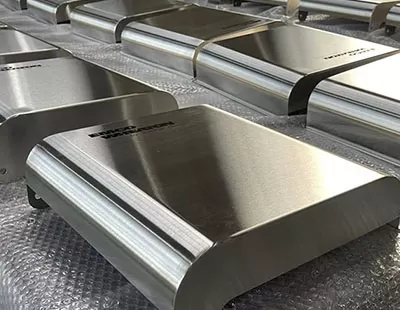
Broad custom sheet metal fabrication scope: stainless steel product customization, sheet metal parts, chassis cabinets, logistics equipment, mining machinery, and customized machinery.
End-to-end capabilities under one roof: laser cutting, bending, welding (MIG/TIG/spot/resistance), and surface finishing—helpful for reducing supplier handoffs that can cause delays and hidden costs.
Quality and certification readiness: ISO 9001, plus top-tier welding certifications (EN-15085-CL1 and AWS), which can be critical for rail transit and other regulated applications.
Industry coverage that matches demanding use-cases: rail transit, nuclear power, aerospace, food machinery, textile, environmental protection, and semiconductor industries.
Cost-effective, on-demand approach with an emphasis on timely delivery for both prototypes and mass production.
Contact Sharp Century today to discuss your requirements and receive a tailored manufacturing solution.